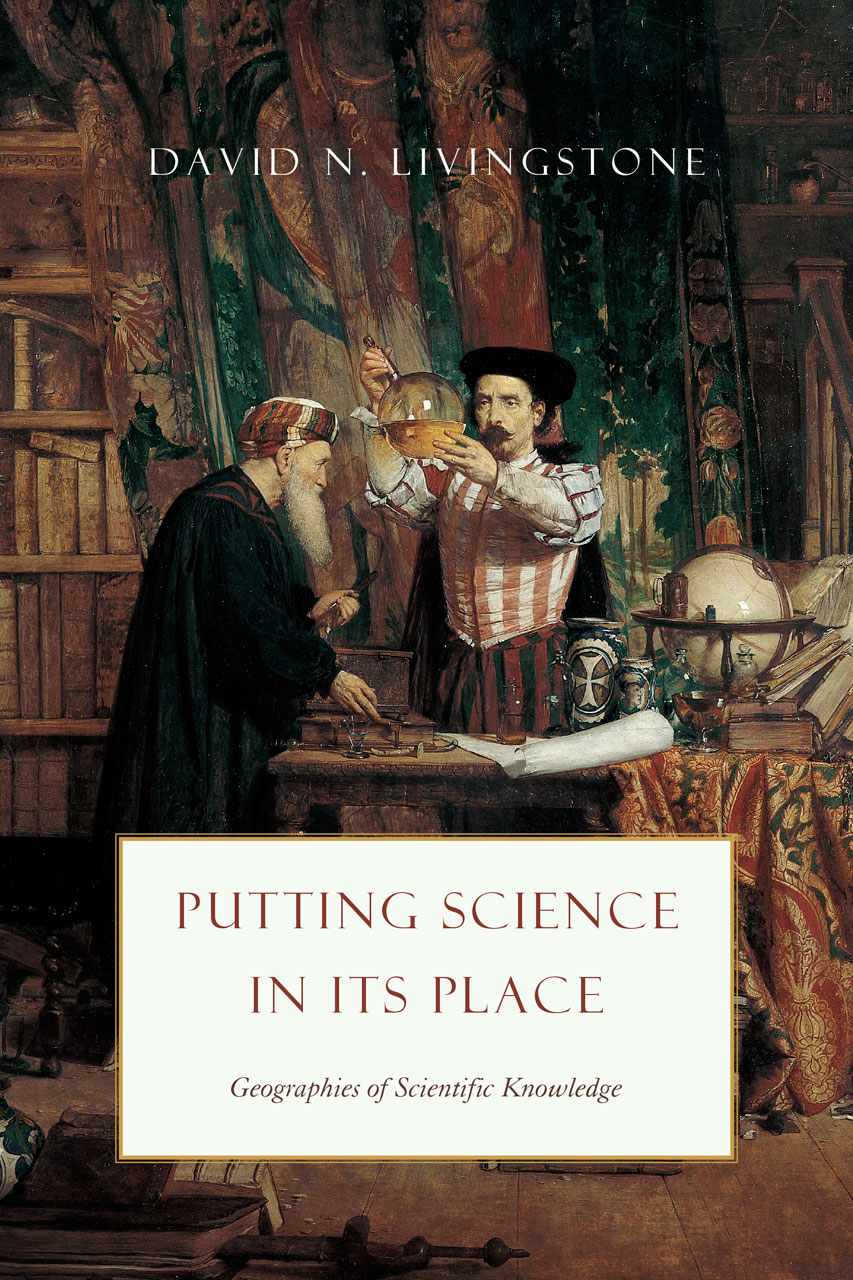
Without reading the book summary the reader might be tempted to believe that this book will focus on a philosophical exploration of the scientific enterprise in general. Not so. This book focuses on the literal “place” (think geography) where scientific inquiry occurs. I was quite intrigued by this topic as many of us are prone to view science as absolute, disembodied from time and space, and impervious to human affairs, and it turns out that this mindset is singularly wrong. The author uses an opportunity here to prove how venues (the sites where science happens, a place like a university laboratory or a museum) and regions (the broad land areas where humans create cultures, like a country), all inevitably influence the types of questions that are asked, the procedures to be utilized, as well as the conclusions that are drawn. Furthermore, the author elaborates on the migration of knowledge, which is not straightforward. It turns out that external information is perceived, interpreted and understood through the lens of geography (i.e. the venues and regions mentioned above), so that the same set of facts is not used the same way by everyone. This is not to imply that there are no universal truths, but rather that how they are grasped differs from place to place. The author says it best when he states that “the irreducible reality of space, and of circulation in the growth of science, is … a potent reminder that scientific knowing is an inescapably social phenomenon involving judgments about the integrity of people and their practices.” There is a lot to unpack here, but at just 186 pages of clear and concise text, this is a short read that will be sure to deepen the reader’s perspective of science.
 Rafael Romero, PhD