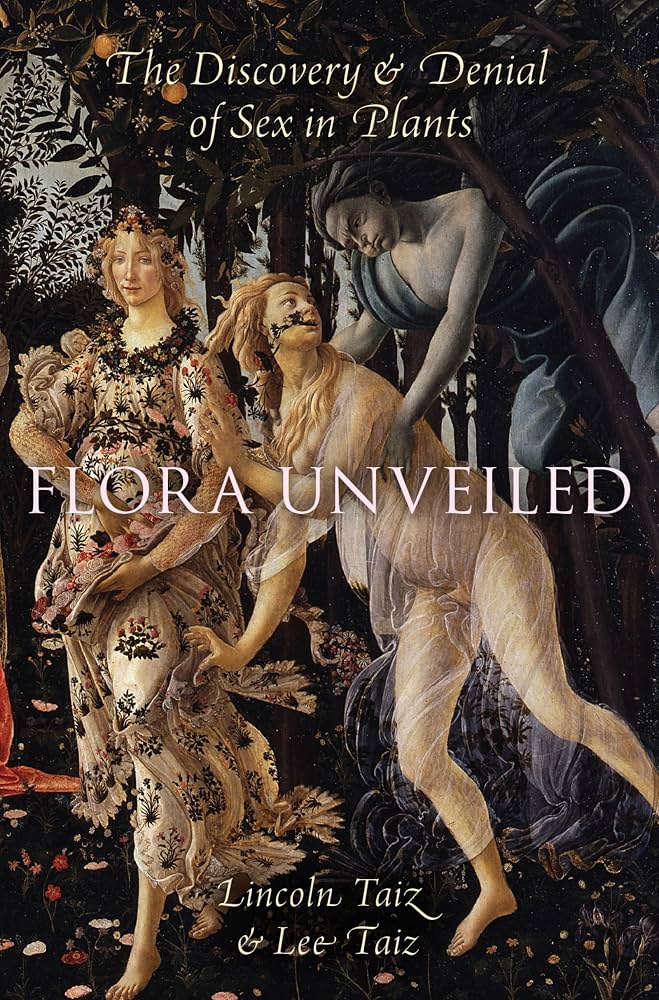
It is odd, albeit maybe not completely unexpected, that this book ends up being listed under the “History of Science” heading rather than the “Biology and Evolution” one. At first glance, it gives the impression of presenting the discovery of sexual reproduction in plants from a biological perspective, particularly as both authors are scientifically trained. Alas, it almost exclusively focuses on the history, mythology, politics, psychology and philosophy underpinning the notion that plants are also sexual creatures. Not to say the book lack merit, but rather that its narrative thread does not center on the biological mechanisms behind plant reproduction if that is what the reader is looking for.
Make no mistake, this is an academic work brimming with valuable information, exquisitely researched and rich in detail. To reiterate, it is just simply light on the biology of plant reproduction. In fact, the first real mention of plant biology does not occur until chapter 6 when we are introduced to the saffron crocus planting cycle, and biology doesn’t start to become prominent to the story until chapter 8 (“Plant Sex from Empedocles to Theophrastus”). Moreover, it is not until the last two chapters of the book (17 and 18; “Sex and the Single Cryptogam” and “Flora’s Secret Garden”, respectively) that the reader finally gets a full biological view of the unique and fascinating world of plant reproduction.
As such, this book should be approached accordingly. To those interested in the full story of how humans came to grasp the idea that plants also had sex, then reading the full book is merited. To those solely interested in learning specifically how the biology was understood, then skipping to the last two chapters would suffice. Of note, a series of beautiful colored plates accompany these last two chapters to facilitate understanding the complex biology.